
Fort Myers–Cape Coral Metro Area: Living Guide (2025)
← Back to Florida's Gulf Coast & Southwest Florida Overview
The Fort Myers–Cape Coral metro sits between Sarasota to the north and Naples to the south. It’s one of the more affordable coastal regions in Southwest Florida and one of the fastest-growing.
People usually land here after ruling out Naples on price or Sarasota on geography. What they find instead is a region built around water access, new construction, healthcare employment, and suburban daily life rather than polished downtown living.
This is not a resort-first market. It’s a place where people live full-time, commute, raise families, and make tradeoffs around space, flood exposure, and insurance.
How the Region Is Structured
Daily life in the Fort Myers–Cape Coral metro is shaped by waterways and sprawl.
US-41 (Tamiami Trail) runs north–south and connects most commercial corridors. I-75 sits inland and handles longer commutes and evacuation routes.
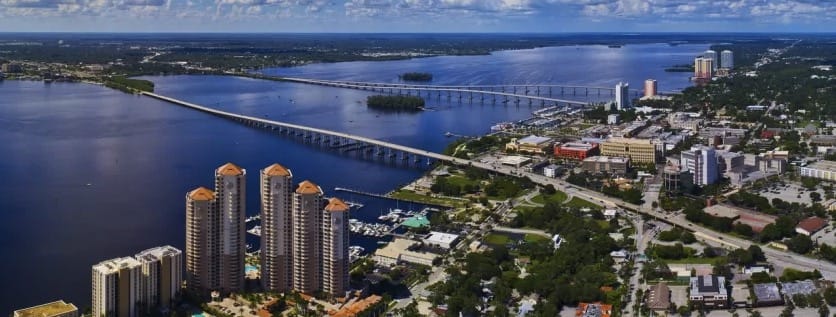
The Caloosahatchee River divides Fort Myers from Cape Coral and creates real friction for cross-river commuting. Cape Coral spreads outward in a canal grid. Fort Myers clusters more tightly, with older neighborhoods near the river and newer development pushing east.
Barrier islands like Sanibel and Captiva operate as a separate world entirely.
What Daily Life Is Like
This is a car-dependent metro. Most errands require driving. Grocery stores, schools, medical offices, and gyms are spread out.
Weekdays are suburban residential. You see activity around schools and neighborhood shopping centers. Downtown Fort Myers has pockets of life, but it is not the center of gravity for most residents.
Weekends split the region. Some people head to the beaches or the islands. Others stay local, using neighborhood parks, boating spots, and pools for beating the heat.
Seasonality is noticeable but less extreme than in Naples. Winter brings more traffic and part-time residents, but this remains a year-round working metro.
Economic Landscape & Worklife
Employment in the metro skews practical rather than corporate. Major drivers include:
- Healthcare (Lee Health is the largest employer)
- Construction and trades
- Education (Florida Gulf Coast University in Estero)
- Tourism and services, especially near the coast
Many households rely on hybrid or remote work, especially in newer subdivisions. There are limited coworking options compared to larger metros, and most white-collar employment is either healthcare-adjacent or remote.
Housing Patterns & Costs
Housing is one of the main reasons people choose this metro.
- Cape Coral is dominated by single-family homes, many built in the last 20 years, often with canal access.
- Fort Myers offers more variety, including older neighborhoods, condos, and newer suburban developments east of I-75.
- Gated communities are common throughout the region.
- Prices are meaningfully lower than Naples, but rising insurance costs narrow the gap in monthly ownership costs.
Flood exposure, insurance availability, and rebuild history matter more here than in Sarasota. Buyers who do best are the ones who understand those risks early rather than treating them as an afterthought.
Schools
The metro is served primarily by Lee County School District, which earns mixed but generally average-to-above-average ratings. It receives a "B" rating on niche.com with higher ratings for College Prep and Administration.
Some schools are well regarded, including Florida Southwestern Collegiate High School - Lee Campus, which receives an "A+" on niche.com. Newer suburban areas and parts of Estero have more concentrated groups of higher-rated schools. Quality varies by zone, and families often choose neighborhoods specifically for school fit rather than relying on district-wide reputation.
- Private schools exist but are more limited than in Naples or Sarasota.
Fort Myers–Cape Coral Subregions
Fort Myers Proper
The Vibe: Older neighborhoods, river access, and scattered pockets of walkability.
Why It Works: Proximity to hospitals, downtown offices, and established areas.
Watch Out For: Flood zones, aging housing stock, uneven upkeep.
Good Fit For: Healthcare workers, retirees, and buyers who value location over newness.
Areas to explore: Downtown Fort Myers, McGregor Boulevard corridor, Whiskey Creek.
Deep Dive: Fort Myers Proper →
Cape Coral
The Vibe: Residential, spread out, and heavily focused on single-family living.
Why It Works: Space, newer homes, boating access, and relative affordability.
Watch Out For: Flood risk, insurance costs, long drives, limited town center.
Good Fit For: Families, trades workers, remote workers, and value seekers.
Areas to explore: Southeast Cape Coral, Southwest Cape Coral.
Deep Dive: Cape Coral →
Estero
The Vibe: Newer, planned, and tied to regional employment.
Why It Works: Proximity to FGCU, newer schools, and mid-point access between Naples and Fort Myers.
Watch Out For: Traffic along US-41, limited older housing character.
Good Fit For: Young families and professionals commuting north or south.
Areas to explore: Near FGCU, east of I-75.
Deep Dive: Estero →
Sanibel & Captiva
The Vibe: Island-focused, seasonal, and tightly regulated.
Why It Works: Beach access and natural setting.
Watch Out For: Storm exposure, insurance volatility, limited services.
Good Fit For: Second-home buyers and flexible residents.
Deep Dive: Sanibel & Captiva →
Who the Fort Myers–Cape Coral Metro Works For
- Buyers priced out of Naples
- Families seeking space and newer homes
- Healthcare workers and trades professionals
- Retirees who want coastal access without resort pricing
- Remote workers comfortable with driving-based daily life
Tradeoffs to Know
- Flood and insurance risk varies block by block
- Car dependence is real
- Bridge crossings affect commutes
- Less cultural density than Sarasota
- Downtown life is limited compared to older metros
Is the Fort Myers–Cape Coral Metro a Good Fit?
This metro works best for people who value space, affordability, and coastal proximity over walkability or dense urban life.
It is a harder fit for buyers who want a strong downtown core, extensive public transit, or low insurance exposure.
Comparing Fort Myers–Cape Coral with Naples or Sarasota?
Save the areas you’re considering in LookyLOO so you can compare housing costs, flood exposure, schools, and daily routines side by side before deciding.