
Where to Live in Florida’s Gulf Coast & Southwest Florida (2025 Guide)
The Gulf Coast & Southwest Florida at a Glance
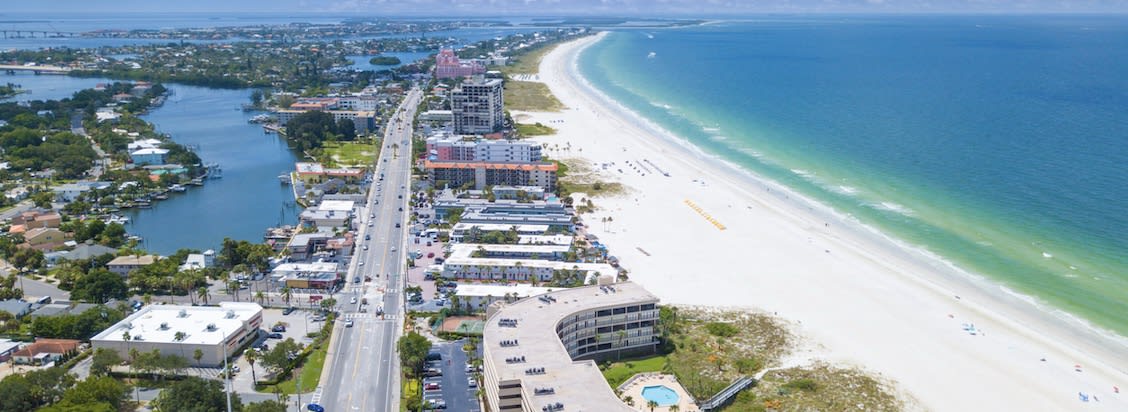
Southwest Florida stretches along the Gulf of Mexico from the Sarasota area down through Naples and inland toward Fort Myers. The region does not operate as a single metro in daily life. Instead, it functions as a series of coastal and near-coastal cities connected by US-41 and I-75.
Population growth here has been driven primarily by retirees, second-home buyers, and remote workers rather than by job concentration. Migration accelerated during and after COVID and has remained elevated, especially in Sarasota and Collier County.
People usually choose this region for the climate, coastal access, and pace of life. They accept tradeoffs related to employment, transit, and seasonality.
Economic Landscape
The economy here is dominated by healthcare, real estate, tourism, and services.
Major employers include hospital systems like Sarasota Memorial Hospital, Lee Health, and NCH Healthcare System.
Construction, property management, and hospitality provide steady work. Professional and corporate job clusters are limited compared to larger Florida metros. Many residents are retired or semi-retired. Remote work plays an outsized role in sustaining full-time residency.
How the Region Is Structured
Daily life follows the coastline. US-41 runs through most cities and acts as a local spine. I-75 handles longer-distance travel and evacuations.
Barrier islands and waterways shape housing patterns and pricing. Living west of US-41 usually means higher prices and shorter trips to the water. Living east of I-75 usually means newer housing and longer drives.
Gulf Coast & Southwest Florida Subregions
Sarasota Area
The Vibe: Mixed-age population with cultural institutions and older neighborhoods.
Why It Works: Arts, healthcare, and beaches coexist more than in most Gulf Coast cities.
Watch Out For: Rising prices and seasonal congestion.
Good Fit For: Retirees, professionals, and year-round residents who want more than resort life.
Areas to explore: Downtown Sarasota, Palmer Ranch, Lakewood Ranch, Siesta Key.
Take a Deep Dive Into: Sarasota Metro →
Fort Myers & Cape Coral
The Vibe: Residential and spread out with strong retiree presence.
Why It Works: More attainable housing and newer subdivisions.
Watch Out For: Long drives and limited cultural infrastructure.
Good Fit For: Retirees, snowbirds, and buyers prioritizing price over walkability.
Take a Deep Dive Into: Fort Myers & Cape Coral →
Naples & Collier County
The Vibe: Affluent, quiet, and seasonal.
Why It Works: Beaches, safety, and predictability.
Watch Out For: Very high prices and limited workforce housing.
Good Fit For: High-net-worth retirees and second-home buyers.
Take a Deep Dive Into: Naples & Collier County →
TL;DR – Where to Live in Southwest Florida
Subregion---------The Vibe------------------------Best For
Sarasota----------Cultural and mixed-age----------Year-round residents
Fort Myers--------Residential and value-driven------Retirees and snowbirds
Naples------------Affluent and controlled-----------Second-home buyers
Housing Snapshot
Housing prices increase sharply closer to the water. Condos dominate barrier islands and downtown cores. Single-family homes dominate inland subdivisions.
Inventory fluctuates seasonally. Insurance and flood exposure play a large role in ownership costs.
Commute & Transit
Driving is essential.
Public transit plays a minimal role. Most trips happen on US-41 or I-75. Traffic increases significantly during the winter season.
FAQs
Q: Is Southwest Florida good for working professionals?
A: Only if you work remotely or in healthcare, construction, or services. Corporate job density is limited.
Q: Does this area feel seasonal?
A: Yes. Population and traffic increase sharply from January through April.
Q: Which area feels least like a retiree market?
A: Sarasota, especially near downtown and institutional anchors.
Comparing Florida metros, regions, or coastal lifestyles?
Save Sarasota, Fort Myers, and Naples in LookyLOO so you can compare cost, seasonality, and daily life before deciding.