Some suburban downtowns continue to attract buyers decade after decade. Others look good for a while, then quietly lose momentum. The difference isn’t architectural style or how new the buildings feel. It isn’t density, branding, or how many restaurants open on weekends.
Across very different regions, the downtowns that perform well over time tend to share a similar shape in how they’re used. Not identical features, but similar patterns.
This article looks at a handful of well-known suburban downtowns and focuses on what they have in common in everyday life. Not as a ranking but as a way to recognize a pattern when you see it elsewhere.
These places stay active on ordinary weekdays
In downtowns that hold demand over time, weekday activity is obvious and consistent.
Evanston, IL
In Evanston, people move through downtown during the workday because it sits between and amidst housing and daily needs. You see students, professionals, and commuters residents passing through for reasons unrelated to dining or entertainment. The downtown doesn’t need an event to be used.
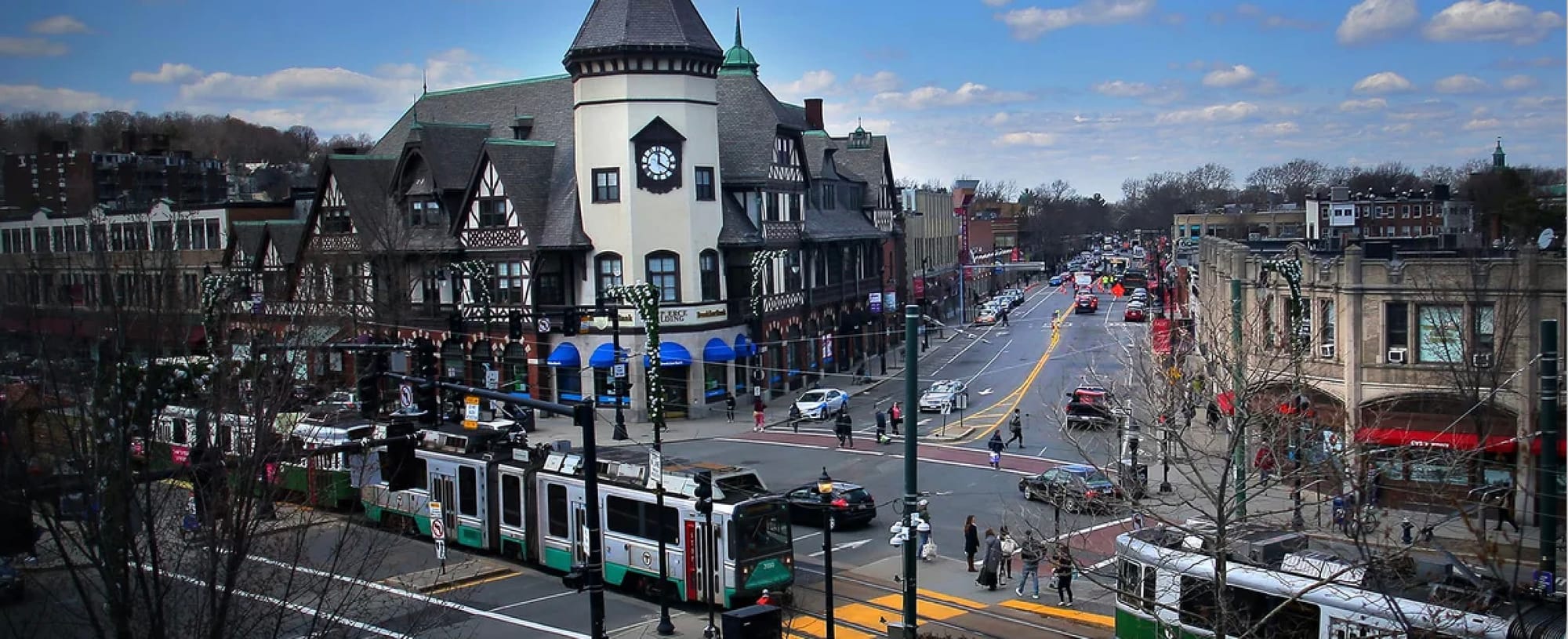
Brookline, MA
Brookline’s commercial streets feel active during the middle of the day because errands, schools, transit, and services overlap tightly. Activity looks routine rather than curated, which makes it steady.
The common thread isn’t energy, it’s regularity.
Housing is embedded in the downtown, not just nearby (although it is also nearby)
In high-performing suburban downtowns, people don’t just live near the core, they also live in it.
Apartments sit above storefronts. Condos face main streets. Smaller multifamily buildings blend into the downtown fabric. Often there is also single-family housing that is walkable to downtown. That embedded housing keeps the area inhabited beyond business hours and makes casual use normal.
Birmingham, MI
In Birmingham, housing sits directly on and around the downtown core. The city has seen the rise over the last couple decades of tons of fun, downtown condos and apartments for young professionals and empty nesters who can afford the price tag. People step out their front doors into everyday activity rather than planning a trip there.
Arlington, VA
Along Arlington’s corridors, housing and commercial space overlap vertically and horizontally. The city has done a wonderful job building housing and lifestyle commercial experiences, around the transit system, something plenty of young professionals commuting to DC appreciate for combining lifestyle and convenience.
The common thread is integration.
The built form shows signs of gradual change
Downtowns that perform well over long periods often look slightly uneven.
Berkeley, CA
Berkeley’s downtown areas include buildings from different eras, with storefronts of varying sizes and uses. The result isn’t uniform, but it’s flexible.
Ann Arbor, MI
Ann Arbor’s core reflects decades of small changes rather than a single master-planned vision. That incremental history shows up in how easily businesses shift and how the area absorbs change without needing a reset.
What stands out in both places is the absence of a finished feel.
Social life appears without being scheduled
In stronger suburban downtowns, people occupy space even when nothing is planned.
You notice:
- People stopping to talk without moving on
- Kids playing while adults sit nearby
- Familiar faces acknowledging each other because they live downtown and/or spend lots of time downtown
- People lingering without buying anything
This kind of use doesn’t require programming. It shows comfort and familiarity. These characteristics might seem soft and not worth documenting but paying close attention to see if the "vibe" is social and persistent is critical.
These places are useful, not performative
A consistent pattern across high-performing downtowns is that they support ordinary needs.
They tend to include:
- Groceries or markets nearby
- Libraries, schools, or civic buildings in or near the core
- Services that people rely on during the week
That usefulness keeps activity steady and less dependent on novelty.
What these places are not
Just as important as what they share is what they avoid.
They are rarely:
- Single mixed-use projects surrounded by parking
- Restaurant-only destinations
- Downtowns that feel finished at launch
- Places where all activity depends on programming
Those places can be pleasant. They just don’t tend to deepen over time or in some cases don't hold value.
How to use these examples
These suburbs aren’t meant to be a checklist or a list of “best” places.
They’re reference points.
If you’re comparing suburbs within a metro, the value comes from recognizing similar patterns:
- Does the downtown get weekday use without an event?
- Do people move through it as part of routine?
- Can it change gradually rather than all at once?
When you start seeing those similarities, it becomes easier to separate places that look good from places that last.
Apply the pattern where you’re searching
Most people don’t choose a suburb in isolation. They compare several that all seem viable.
LookyLOO helps you save candidates that are in your shortlist. It also helps you compare suburbs within the same metro and understand how these places actually function day to day, not just how they’re marketed.
Related guides for comparing suburban downtowns
If you’re researching suburbs with downtowns, these guides are designed to work together — depending on where you are in the process.
- How to Tell If a Suburban Downtown Will Raise Home Values
Explains why certain downtowns continue to attract buyers and hold demand over time.
- How to Evaluate a Suburban Downtown Before You Buy
A practical field guide for comparing places in person using observable cues.