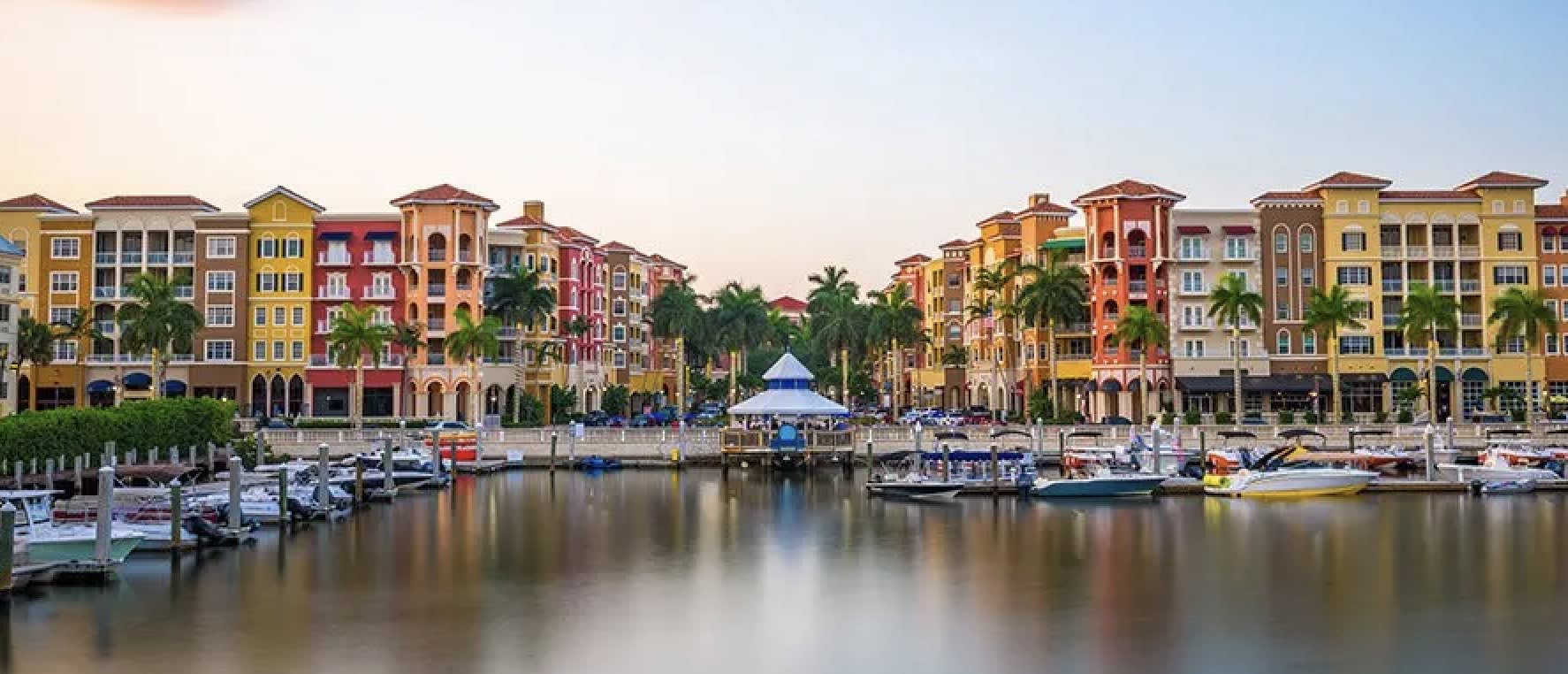

# Where to Live in Florida’s Naples and Collier County Metro Area (2025 Guide)
← Back to Gulf Coast & Southwest Florida Overview
The Naples / Collier County Metro at a Glance
The Naples metro is smaller and more concentrated than Sarasota or Tampa, and it operates very differently as well. This is a high-wealth, low-density region built around luxurious coastal living and gated communities.
Naples is the cultural and commercial center. Collier County stretches east and south into large residential developments, conservation land, and agricultural areas. Population growth has been steady, driven less by job migration and more by retirees, second-home buyers, and remote workers. Demand is tied to lifestyle and capital preservation rather than affordability.
Economic Landscape
Naples does not function like a diversified job hub. Employment is concentrated in a few sectors:
- Healthcare or medical employers like NCH Health System or Arthrex
- Hospitality and resort services
- Professional services supporting wealth management, real estate, and private clients
- Education and public services like Collier County Public Schools
- Resort, property management, and service companies tied to seasonal population swings
Many residents are retired, semi-retired, or work remotely. Others commute within the county to healthcare campuses, professional offices, or private clubs.
How the Metro Is Structured
Naples is not organized around a single downtown in the way Sarasota or Fort Myers are. Instead, daily life is spread across:
- Coastal neighborhoods and beach access points
- Gated communities inland
- Commercial corridors along Tamiami Trail (US-41) and Immokalee Road
Driving is essential. There is no meaningful regional transit system. Most errands, school trips, and social plans are built around car access.
How the Naples / Collier County Metro Is Structured
Daily life in Collier County follows a clear east–west logic shaped by the coast, gated development patterns, and driving corridors.
US-41 (Tamiami Trail) runs north–south and acts as the main commercial spine. I-75 sits farther inland and handles longer-distance commuting and seasonal traffic. Most residential choices fall into predictable bands based on distance from the water and access to services.
Living closer to the coast usually means higher prices, older housing, and shorter trips to the beach. Living farther east generally means newer homes, gated communities, and longer daily drives.
Here’s how the metro breaks down in practice.
Naples Proper & Old Naples
The Vibe
Established, coastal, and expensive. This is where Naples feels most like a traditional town, with older streets, beach access, and a concentration of restaurants and shops.
Why It Works
Beach proximity, older housing stock, and walkable pockets near Fifth Avenue South and Third Street South. Cultural amenities and dining are more concentrated here than anywhere else in the county.
Watch Out For
High purchase prices, limited inventory, insurance costs, and heavy seasonal traffic. Many homes are older and come with renovation or flood considerations.
Good Fit For
Retirees, second-home buyers, and households prioritizing coastal access over space or schools.
Areas to explore
Old Naples, Aqualane Shores, Moorings, Coquina Sands.
Take a Deep Dive Into: Naples Proper →
North Naples
The Vibe
Residential, newer, and organized around gated communities and major roads rather than a central downtown.
Why It Works
Newer housing, strong school reputations, and proximity to medical offices and retail corridors. This is where many full-time residents live.
Watch Out For
Car dependence, HOA and club fees, and limited walkability. Social life is often tied to neighborhoods rather than shared public spaces.
Good Fit For
Full-time residents, families, and professionals who want newer homes and predictable daily routines.
Areas to explore
Pelican Bay, Vanderbilt Beach Road corridor, parts of Immokalee Road.
Take a Deep Dive Into: North Naples →
East Naples
The Vibe
More mixed and less polished. Older neighborhoods sit alongside newer development and working-class areas.
Why It Works
Lower entry prices than coastal or North Naples areas. Some neighborhoods offer proximity to downtown without waterfront pricing.
Watch Out For
Inconsistent housing stock, longer drives to beaches, and variable school zoning. This area requires more block-by-block evaluation.
Good Fit For
Value-oriented buyers, local workforce households, and people comfortable trading polish for price.
Areas to explore
Golden Gate, Bayshore Drive corridor, East Naples residential pockets.
Take a Deep Dive Into: East Naples →
Marco Island
The Vibe
Island-based, seasonal, and self-contained. Life here revolves around water access and a slower daily pace.
Why It Works
Direct beach and boating access, strong second-home appeal, and a defined island identity separate from Naples Proper.
Watch Out For
Bridge dependence, limited employment options, insurance exposure, and heavy seasonality.
Good Fit For
Retirees and second-home buyers prioritizing island living over convenience.
Areas to explore
South Beach, Tigertail Beach area, inland canal neighborhoods.
Take a Deep Dive Into: Marco Island →
Inland Collier County
The Vibe
Low density, spread out, and residential. This is the least coastal and most car-dependent part of the metro.
Why It Works
Larger homes, newer construction, and lower prices per square foot. Appeals to buyers who want space.
Watch Out For
Long drives, fewer amenities, and limited public gathering spaces. Daily life requires planning.
Good Fit For
Buyers seeking space, newer housing, and lower costs who don’t need daily beach access.
Areas to explore
Golden Gate Estates, newer developments east of I-75.
Take a Deep Dive Into: Inland Collier County →
Housing Snapshot
Housing costs in the Naples metro are among the highest in Florida outside South Florida.
Common patterns include:
- Condos and townhomes near the coast
- Single-family homes in gated communities inland
- HOA and club fees as a normal part of ownership
Inventory is shaped by rebuilds, renovations, and turnover rather than large-scale new supply. Monthly carrying costs often matter more than purchase price.
Worklife & Daily Logistics
Naples works best for people who do not rely on daily commuting to a single job center.
Healthcare workers, educators, and service professionals often live near their workplace to avoid long drives. Remote workers and retirees structure days around errands and social commitments rather than work schedules.
Traffic increases sharply during winter season. Locals plan around that reality.
Schools
Collier County Public Schools are regarded as solid within Florida, with several highly rated campuses, particularly in North Naples. The district receives an "A-" score on niche.com with highest scores for college prep. The northeast corner of the district, near the water, has the highest concentration of "A" rated schools.
School choice matters here because:
- Zoning lines affect daily drive times
- Many families compare public, charter, and private options. Florida is a big charter school state.
- Seasonal population affects school culture in some areas
- Families typically choose a subarea first, then confirm schools second.
Who the Naples Metro Works For
- Retirees and semi-retired households
- Second-home buyers
- Remote workers
- Buyers prioritizing climate, privacy, and capital stability
Watch Outs
- High housing and insurance costs
- Limited employment diversity
- Seasonal congestion
- Heavy reliance on driving
TL;DR – Where to Live in the Naples Metro
Subarea---------------What It’s Like----------------------Best For
Naples Proper---------Coastal, established, expensive------Retirees, second-home buyers
North Naples----------Gated, newer, school-oriented-------Full-time residents, families
East Naples------------Mixed, more affordable-------------Value buyers, local workforce
Marco Island-----------Island, seasonal, quiet--------------Second homes, retirees
Inland Collier----------Spread out, car-dependent----------Buyers seeking space
Naples / Collier County FAQs
Q: Is Naples only for retirees?
A: No, but retirees and second-home owners make up a large share of the population. Full-time working families tend to cluster in North Naples and inland communities where schools and daily logistics are easier.
Q: Is Naples walkable?
A: Only in limited pockets near the coast. Most daily life requires driving, especially outside Old Naples.
Q: How bad is seasonality?
A: Winter season changes traffic, restaurant access, and service availability significantly. Many residents plan routines around it.
Q: Are insurance costs a real concern?
A: Yes. Flood and wind coverage materially affect ownership costs, especially near the coast. Buyers factor this in early.
Q: Do people commute out of Naples for work?
A: Most employment is local, healthcare- or service-related, or remote. Long-distance commuting is uncommon.
Is the Naples / Collier County Metro Right for You?
Naples offers luxurious privacy and coastal access. It is not a growth-driven job market or a walkable urban environment.
For buyers who want predictability and lifestyle consistency, it works extremely well. For those seeking career mobility or cultural density, it can feel limiting.
If you’re comparing Naples with Sarasota or Fort Myers, save the metros you’re considering in LookyLOO so you can compare housing costs, school access, and daily logistics before deciding.