
Where to Live in the Orlando & Central Florida Metro Area (2025 Guide)
The Orlando Metro at a Glance
The Orlando–Kissimmee–Sanford metro has grown into one of the largest metros in the Southeast, reaching roughly 2.94 million residents in 2024, with especially strong growth from 2023 to 2024. Growth accelerated during the pandemic as households left higher-cost regions, but it has continued beyond that period. The main drivers now are a steady stream of in-migration, a broad job base anchored by tourism and healthcare with added strength in education, logistics, and defense, and a housing pipeline that keeps expanding outward through new subdivisions and master-planned communities.
In practice, “Orlando” isn’t one kind of place. Most people end up choosing between very different options: a handful of in-town neighborhoods, older close-in suburbs, or newer master-planned communities farther out. The decision usually comes down to a few practical questions: how long the commute will actually feel, whether the schools line up with what you need, how flood and insurance costs affect the budget, and whether the amenities around you primarily serve tourists and short-term visitors, or whether they function as everyday infrastructure for people who live there. Let's dive into the particulars of each area to see which makes sense for you.
Economic Landscape
Orlando’s job base is anchored by theme parks and tourism. It also has deep employment in healthcare, higher education, aviation/airport operations, and defense/aerospace. Large employers include
- Walt Disney World
- AdventHealth
- Universal Orlando
- Orlando Health
- Lockheed Martin
- University of Central Florida
Healthcare and life sciences have concentrated around Lake Nona Medical City, which includes major medical and academic institutions.
How the Metro Is Structured
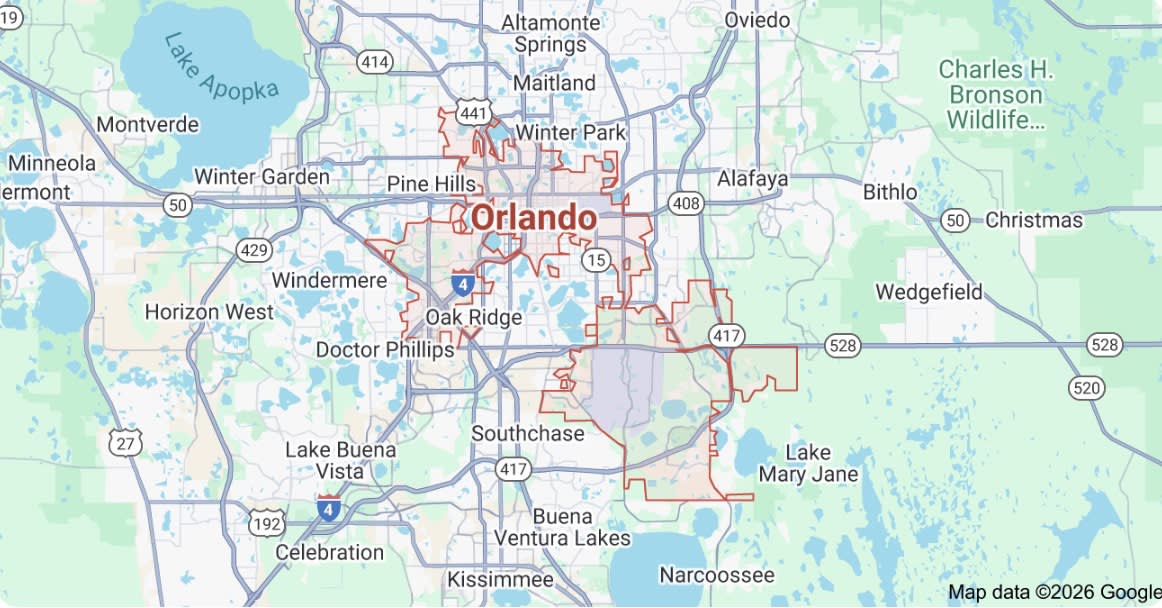
Orlando is organized by corridors more than by a single “downtown vs suburbs” pattern. The urban core is relatively small for a metro of this size, with only a few neighborhoods that feel consistently active and walkable. Most people who want an “urban” lifestyle focus on a handful of neighborhoods near Downtown, Mills/50, and the Park Avenue area of Winter Park.
Most population growth is happening on the edges of the metro, where new housing is built faster than roads, schools, and local services can fully catch up. Most recent growth has taken the form of large, master-planned communities, where housing, schools, and retail are organized into self-contained areas, and most errands require driving.
Daily life in most parts of the metro depends on highways, and commute times can change quickly based on accidents, weather, or seasonal traffic. I-4 is the spine. The 408, 417, 429, and Florida’s Turnpike determine how your day is going to work more than city limits.
Orlando & Central Florida Subregions
Orlando Proper (Downtown + City Neighborhoods)
The Vibe: A small urban core with a few dense, active pockets.
Why It Works: Shorter drives for in-town errands. More independent restaurants and local venues.
Watch Out For: “Orlando city life” is neighborhood-specific. Some areas feel suburban, two streets off a corridor.
Good Fit For: Renters, young professionals, people who want a closer-in life without needing a huge house.
Areas to explore: Downtown, Thornton Park, College Park, Mills 50, Audubon Park, SODO.
Take a Deep Dive Into: Orlando Proper →
Comparing a few Orlando areas?
Save the neighborhoods you’re considering in LookyLOO so you can compare them later without relying on memory after tours.
Winter Park + Maitland
The Vibe: Polished, established, and expensive by Orlando standards.
Why It Works: Park Avenue and the surrounding neighborhoods function as a real town center. Schools are a major draw for many families.
Watch Out For: Inventory is tight. Pricing can jump fast once you’re near the most walkable blocks.
Good Fit For: Families prioritizing schools, buyers who want an older housing feel, people who want a “small city” rhythm.
Areas to explore: Park Avenue area, Hannibal Square, Maitland near the Winter Park edge.
Take a Deep Dive Into: Winter Park + Maitland →
Lake Nona + Southeast Orlando
The Vibe: Newer, master-planned, and built around healthcare and campus-style development.
Why It Works: Proximity to the airport. A strong concentration of medical institutions and related employers.
Watch Out For: Some areas feel highly planned, with newer buildings and defined uses, which appeals to some buyers but can feel less flexible or organic to others. Some parts lack the older street grid and “randomness” people expect from a town center.
Good Fit For: Healthcare professionals, frequent travelers, families who prefer new construction, and buyers who like planned communities.
Areas to explore: Lake Nona, Medical City area, and surrounding southeast Orlando neighborhoods.
Take a Deep Dive Into: Lake Nona + Southeast Orlando →
Horizon West + Winter Garden
The Vibe: Fast-growing, family-heavy, and dominated by newer subdivisions.
Why It Works: Homes are newer. Schools and parks drive the decision for many households. Downtown Winter Garden gives the area a real center.
Watch Out For: Traffic builds quickly as growth continues. Daily errands can require a lot of short drives.
Good Fit For: Families, first-time buyers moving up, remote workers who want space, Disney-area workers who want a newer home base.
Areas to explore: Downtown Winter Garden, Horizon West villages, Hamlin area.
Take a Deep Dive Into: Horizon West + Winter Garden →
Kissimmee + St. Cloud
The Vibe: More mixed and more value-oriented. Some areas feel purely suburban. Some feel semi-rural.
Why It Works: Home prices are generally lower than in Winter Park or parts of Horizon West, which is why many buyers look here first. Easier access to the theme park employment corridor.
Watch Out For: The experience changes block by block. Some areas are heavily investor-owned or short-term rental-influenced.
Good Fit For: Value seekers, park and hospitality workers, buyers who want more space for the money.
Areas to explore: Kissimmee near key commuter routes, St. Cloud for more space and a quieter pace.
Take a Deep Dive Into: Kissimmee + St. Cloud →
TL;DR – Where to Live in Orlando & Central Florida
Subregion----------------------The Vibe---------------------------Best For
Orlando Proper-----------------Closer-in, neighborhood-driven------Renters, in-town lifestyle, shorter drives
Winter Park + Maitland----------Established, high-demand-----------Families prioritizing schools, walkable town-center feel
Lake Nona + SE Orlando---------New, master-planned, healthcare----Healthcare, airport access, new construction
Horizon West/Winter Garden----Growth corridor, family-heavy-------Families, newer homes, remote workers
Kissimmee + St. Cloud-----------Value-oriented, mixed---------------Budget-conscious, more space, park-area workers
Housing Snapshot
Orlando pricing varies sharply by subregion. A practical anchor point: the Orlando regional median home price was about $385,000 in 2025 (per the local Realtor association’s annual recap). List prices and time-on-market can look different from closed-sale medians, so expect headlines to vary depending on the data source.
Commute & Transit
Most households live on a car and highway system. SunRail helps for a narrow set of commutes, but it does not replace driving for most people’s daily needs. If commute is central to your decision, the best move is to test drives at the times you would actually do them. That sounds painful (who wants to do "test drives" when the highways are packed), but it's going to be your daily life, so seriously test this.
FAQs
Q: Is Orlando mostly master-planned suburbs?
A: A large share of recent growth has been in master-planned communities, especially to the south, west, and southeast. The “city” experience exists, but it is concentrated in specific neighborhoods.
Q: What’s the most family-oriented part of the metro?
A: Winter Garden/Horizon West and many parts of Winter Park/Maitland are common shortlists for families. The right answer depends on budget, school priorities, and how much driving you can tolerate.
Q: Does Lake Nona feel like a real town?
A: Some people love that it feels new and organized. Others miss older streets and local messiness. It’s a good fit if you value new construction and the medical/airport proximity.
Q: Where do people move if they want “walkable”?
A: Walkability in this metro tends to exist in small, specific areas rather than across entire cities or large areas. Downtown/Thornton Park, parts of College Park, Park Avenue in Winter Park, and Downtown Winter Garden are common targets.
Q: Is Orlando a good metro for first-time buyers?
A: It can be, but the metro is competitive and very subregion-dependent. Many first-time buyers end up in growth corridors or farther-out areas to get a newer home at a workable price point.
Trying to narrow it down?
Use LookyLOO to search Orlando-area suburbs, save your shortlist, and compare how different areas actually fit your daily life.
Related incentive programs
- View program
Seminole County Jobs Growth Incentive Program
Business program